Rigid Roof Insulation Recycling: A Contractor’s Workflow
Back to the Disposal Alternatives blog
A roof recycling plan needs to work on an active jobsite. Roofing crews are managing removal, material movement and the next phase of the roof installation. For recycling to be useful, the collection process must fit those activities and the site’s available space.
Disposal Alternatives coordinates equipment, collection and transportation for qualifying commercial roof insulation and roofing materials. The project team then has a clear way to separate and load accepted material as part of the tear-off workflow, rather than trying to organize recycling after everything has been discarded.
Build the plan around the actual project
Start with the roof assembly, expected material quantity, removal schedule and site access. Discuss where qualifying material can be staged and what collection equipment can be accommodated. A large roof area is only one part of the picture; the pace of removal and the available loading area matter as well.
Reviewing these details before work starts helps the collection plan reflect the project. Equipment and transportation arrangements vary, so confirm the approach with Disposal Alternatives instead of relying on a setup used on a different job.
Separate qualifying material during removal
Once eligibility is confirmed, identify the material the crew should keep out of general demolition debris. Communicate that decision to the people removing and moving the roofing materials, so the recycling plan is understood where the work takes place.
Separating qualifying insulation as it comes off the roof supports a defined collection route. It also avoids planning around the assumption that material already mixed into the general waste stream can simply be collected for recycling later.
Connect stacking with the loading plan
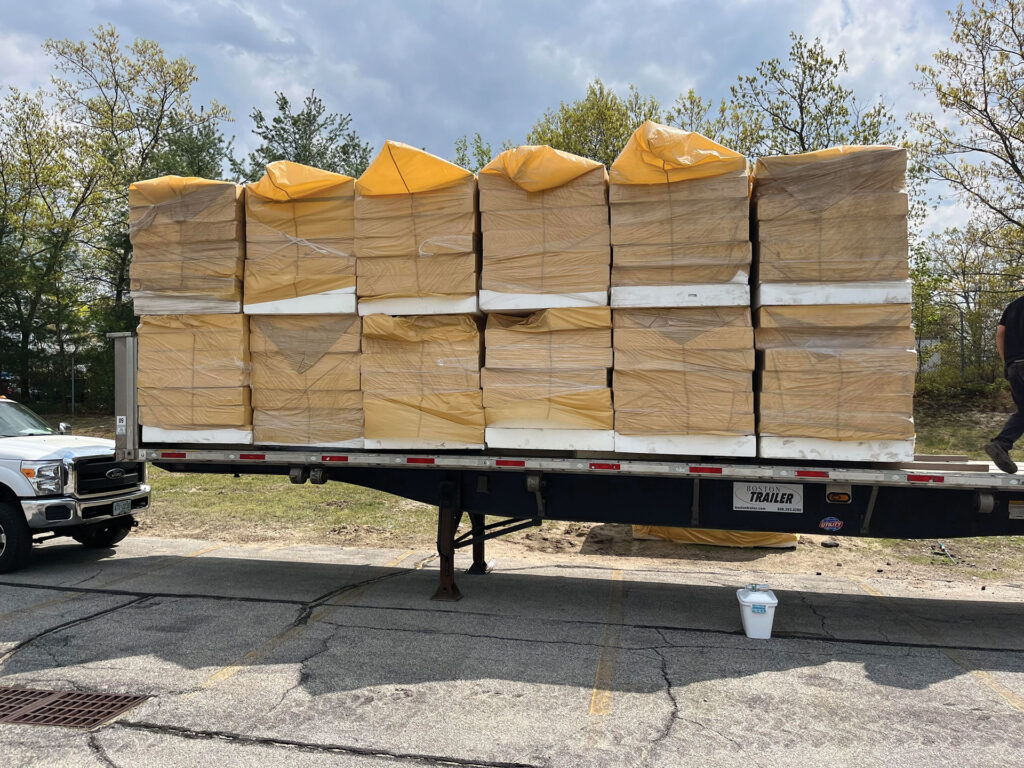
Rigid insulation boards are stacked in preparation for loading. Coordinate where that material will be placed and how it relates to the designated collection equipment. Confirm project-specific preparation and loading requirements before the crew begins.
Disposal Alternatives uses 48-foot flatbed trailers for many insulation collection projects, with other arrangements reviewed according to project needs. Collection planning should fit the roofing contractor’s work methods and site procedures; it does not replace them.
Give dispatch an early update
As the trailer approaches capacity, contact dispatch to coordinate its removal and, when needed, delivery of an empty replacement. Assigning a project contact makes it clearer who will pass along those updates.
Keep that communication tied to progress on the roof. If removal accelerates, the schedule shifts or the expected volume changes, let the collection team know. A plan based on current conditions is more useful than waiting until a full trailer leaves no available collection capacity.
Keep different material decisions clear
A roof may contain qualifying rigid insulation and a membrane that needs a separate review. Confirm the arrangements for each accepted material and communicate those distinctions to the crew. Avoid treating approval for one component as approval for the entire roofing assembly.
The same principle applies when conditions differ from the original review. Raise the change with Disposal Alternatives before assuming the existing collection plan still fits.
Make recycling a planned part of tear-off
Practical recycling is a sequence of coordinated decisions: review the materials, agree on collection, separate qualifying material, stack for loading and keep dispatch informed. Planning that sequence gives the crew a clear route for accepted material alongside the project’s other waste-management arrangements.
Read our step-by-step recycling process or discuss your upcoming commercial roofing project. Early coordination helps establish how recycling can fit your jobsite’s normal workflow.