Rigid Insulation Board Loading Guidelines and Contractor Handout
Back to the Disposal Alternatives blog
Download and print the contractor handout
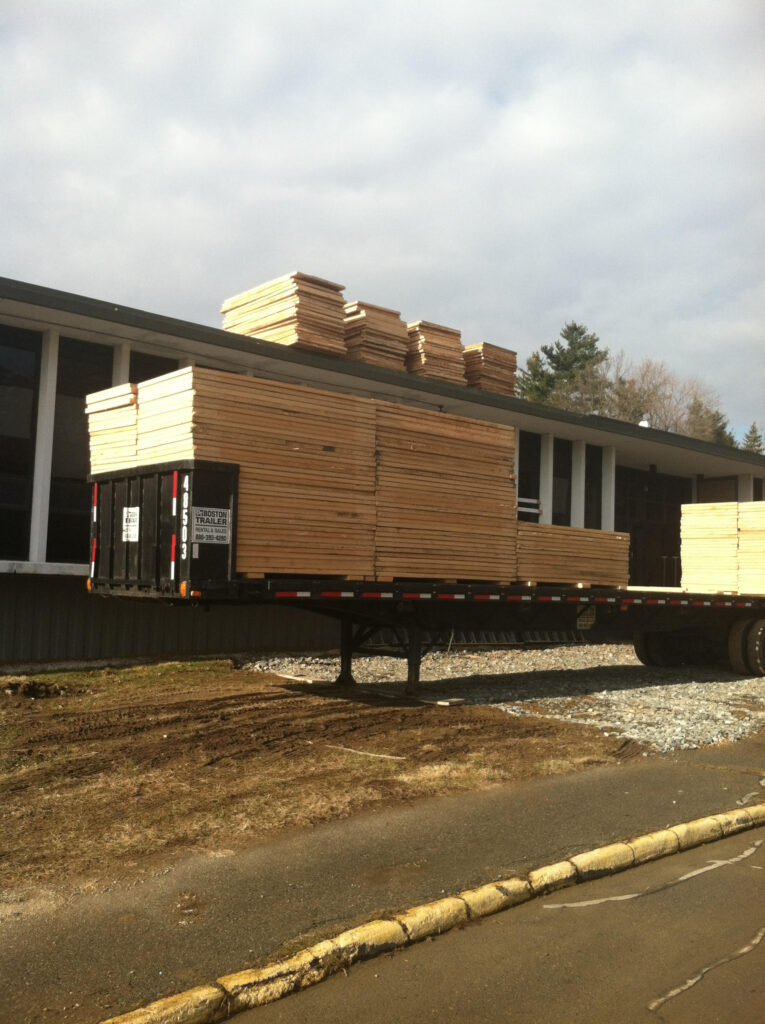
Roofing contractors: download this one-page PDF, print copies and share it with your foreman and loading crew before loading. It includes the five requirements plus photos of approved and inappropriate loading.
Download contractor handout (PDF)
Open PDF for printing · One-page roofing contractor handout
Keep a printed copy available at the jobsite. Review the checklist and loading examples with the crew before the trailer is filled.
A successful recycling load starts before the trailer is filled. Qualifying roof insulation must arrive in the right condition and be prepared for the receiving team to handle it. Material that looks recyclable on the roof can still be turned away if the load does not meet the requirements.
Disposal Alternatives asks roofing contractors and project teams to review the five requirements below before loading. They are part of planning the collection, not details to work out when the truck reaches its destination.
Before you load: five requirements
1. Leave room for forklift blades. Allow clearance underneath the bottom board.
2. Load material 90 inches high. 90 inches = 7 feet 6 inches.
3. Do not load broken or wet boards.
4. No tapered material.
5. Material must be free of mold.
1. Leave room for forklift blades
The receiving team needs access underneath the material to unload it. Clearance beneath the bottom board allows forklift blades to enter underneath the stack instead of meeting the edge of the insulation. Planning that access when the load is prepared avoids leaving the receiving team to solve an access problem after arrival.
Fork access also matters to proper load handling. OSHA’s load-handling guidance emphasizes safely arranged, stable loads and placing forks underneath the load. That is general handling guidance; the clearance requirement above is Disposal Alternatives’ receiving requirement.
Discuss how the required clearance will be provided before the crew starts stacking. If the arrangement is unclear, contact Disposal Alternatives before loading rather than guessing at a clearance dimension or support arrangement.
2. Load material 90 inches high
90 inches is 7 feet 6 inches. Make sure everyone preparing the load understands the same height requirement. Converting it into feet and inches helps prevent a measurement from being misheard or interpreted differently by different crew members.
A specified loading height gives the project team a clear preparation standard. Checking it while loading is more practical than discovering at the receiving end that the material was prepared to a different height. Review the arrangement with Disposal Alternatives before loading if there is any uncertainty about how the requirement applies to your trailer.
The 90-inch instruction is a program requirement, not a general statement about a vehicle’s legal height or a forklift’s capacity. Loading and transportation must also follow the contractor’s and carrier’s applicable equipment and safety requirements.
3. Do not load broken or wet boards
Material condition is part of acceptance. Broken boards can be more difficult to keep together in organized stacks and may require additional handling. Wet boards do not meet the required condition for this program. Neither problem is resolved simply by putting the boards on the trailer.
Check boards as they are separated during tear-off, and keep broken or wet material out of the recycling load. If the condition is uncertain, ask for a review before loading it. Finding a problem at the jobsite gives the team an opportunity to address it before transportation has already taken place.
4. No tapered material
Tapered roof insulation has a sloped profile rather than a uniform thickness. For example, Carlisle describes its tapered polyiso product as a sloped rigid roof insulation panel. Identifying that difference during the material review helps crews separate the material correctly.
Tapered insulation is not accepted under these loading guidelines, even if the boards otherwise appear clean and intact. Acceptance depends on the form of material as well as its name and condition. An approval to collect qualifying insulation should not be interpreted as permission to include every insulation component removed from the roof.
Identify tapered material before tear-off where possible and keep it separate from the accepted recycling material. If the crew is unsure whether a board is tapered, resolve the question before it is loaded.
5. Material must be free of mold
Boards must be free of mold to meet the program’s condition requirements. Do not include moldy boards simply because they are mixed in with other insulation or because the rest of the load appears acceptable.
Check material condition during separation and again before loading. If mold is suspected or the condition cannot be confirmed, keep that material out of the load and contact Disposal Alternatives for review. Do not assume that covering the material or transporting it changes whether it is eligible for acceptance.
Why a delivery may be turned away
The receiving end must be able to accept the material and handle the load as prepared. Inadequate fork access, an incorrect loading height, broken or wet boards, tapered material or mold can prevent a delivery from meeting those requirements.
A load that does not meet the guidelines may be turned away. That can interrupt the planned collection and create additional coordination for the roofing contractor and transportation team. Reviewing the requirements before loading is the opportunity to prevent an avoidable problem, rather than asking the receiving team to make an exception after arrival.
Include the loading review in your project plan
Share these five requirements with the people who will separate, stack and load the insulation. Review them alongside the planning-before-tear-off checklist so material acceptance, trailer preparation and transportation are coordinated before removal begins.
If the material condition, board profile, loading height or forklift access is uncertain, contact Disposal Alternatives before loading. Confirming the arrangement early helps keep the project and receiving team working from the same plan.